For years I carried bulky traditional wallets that made my pockets feel like bricks. Sitting down with a thick leather wallet was uncomfortable, and digging through stacks of cards every time I paid for something was frustrating.
Once minimalist wallets started becoming popular — metal wallets, accordion wallets, and smart wallets with built-in trackers — I realized how outdated the old designs really were.
I’ve spent the last few years trying different styles, from the popular Ridge wallet to modern smart wallets like Ekster. Some were incredible. Some were gimmicks.
These are the five wallets I keep coming back to and genuinely recommend if you’re looking for the best wallets for men today.
| Wallet | Type | Capacity | Best For |
| Ridge Wallet | Metal Minimalist | 1–12 cards | Ultra slim everyday carry |
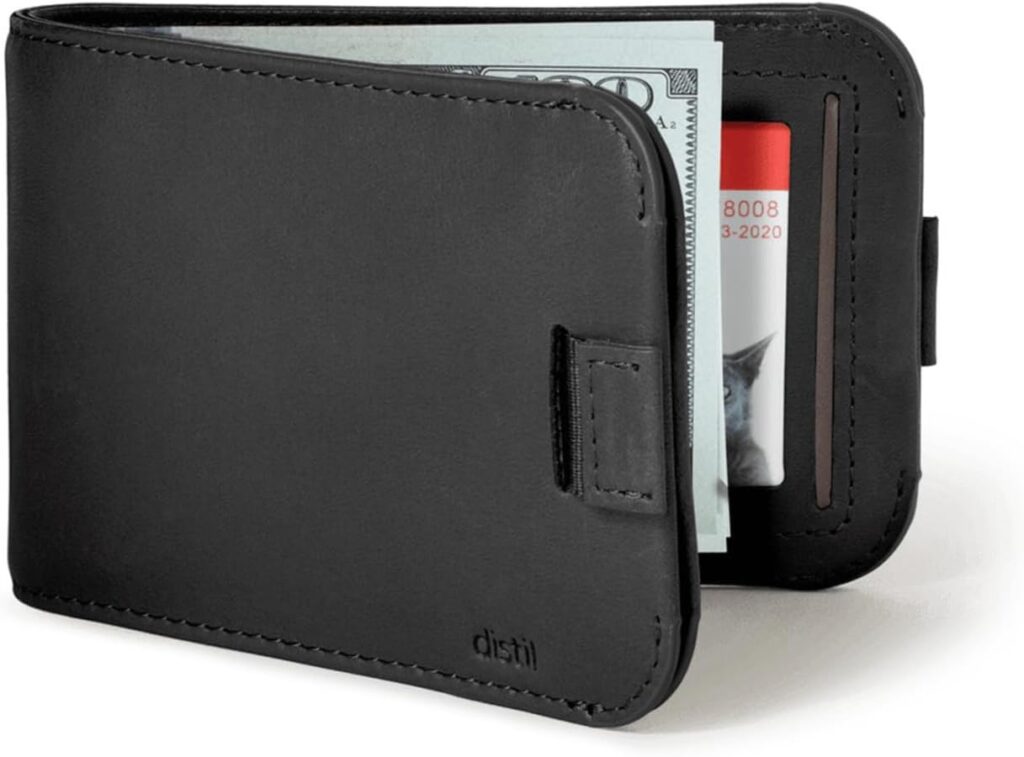
| Distil Union Wally Bifold | Slim Leather | 6–10 cards | Modern leather wallet |
| Ekster Parliament | Smart Wallet | 1–10 cards | Trackable wallet with quick card access |
| Groove Wallet | Accordion Wallet | 1–12 cards | Spring-loaded quick access |
| Bellroy Hide & Seek | Premium Leather | 5–12 cards | Classic wallet with modern design |
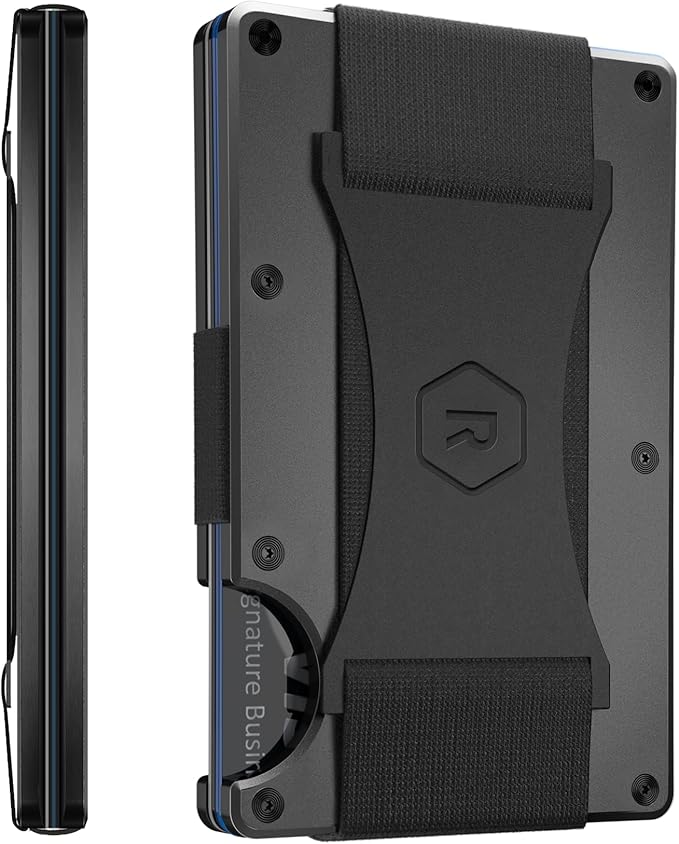
The Ridge Wallet is the wallet that most people picture when they hear “minimalist wallet,” and for good reason — it is the brand that made the format mainstream. The design is fundamentally simple: two rigid plates held together by a steel money clip or elastic band, with cards stacked between them. There are no pockets to dig through, no leather to break in, and no fabric to wear out. You fan the cards slightly to access them, and the elastic band holds the stack firmly at all times.
The construction quality is high across all material options. The aluminum version is the most popular and most affordable. The titanium version is for buyers who want the lightest possible carry — titanium is roughly 45 percent lighter than steel and meaningfully lighter than most aluminum alloys. The carbon fiber version sits between the two in weight and adds a distinctive visual texture. All versions come with RFID blocking built into the plate construction, which is a functional benefit rather than a marketing add-on — the metal plates genuinely block electronic skimming.
The honest limitation of the Ridge and any plate-style wallet is the access method. Fanning cards slightly and pulling one out is not slower than a traditional wallet, but it is different, and some users find it less intuitive for quick single-card access than a dedicated quick-pull slot. It also lacks a dedicated cash slot — the money clip on the exterior works, but carrying folded bills externally is a change that takes adjustment.
Ridge offers a lifetime warranty and has a strong track record of honoring it. The wallet does not age aesthetically in the same way leather does — it either maintains its appearance or shows visible scratches, depending on the material. Titanium scratches least visibly; aluminum scratches most easily but can be polished.
Key Features
Pros
Cons
Best for: Men who want maximum durability, genuine RFID protection, and the slimmest possible carry without leather. Also well suited to those who have tried thin leather wallets and found they still expand over time.
Distil Union approaches the slim leather wallet problem from an engineering angle rather than a style angle. The Wally Bifold uses a combination of full-grain leather and an internal elastic band system that keeps cards organized and the wallet flat even as the number of cards varies. The elastic compresses against the card stack rather than letting it float loosely — which is the primary reason traditional bifolds expand and bulge over time. When you remove cards, the wallet compresses back down rather than holding the stretched shape.
The leather is full-grain, which means it is the highest quality cut — the outer surface of the hide, with natural grain intact, that develops a patina over time rather than peeling or cracking the way corrected or bonded leather does. For buyers who want a leather wallet that looks better at five years than at five months, full-grain is the only option worth considering.
The bifold form factor is deliberately familiar. If you are making the switch from a traditional billfold, the Wally Bifold maintains the visual language and carry feel of a standard wallet while eliminating the bulk. Cash sits in a full-width cash pocket. Cards are organized in individual or shared slots. The transition is minimal.
RFID blocking is available as an option at a slight premium, using a thin RFID-blocking layer laminated inside the leather. It is worth noting that for those who carry mostly chip-and-pin or tap-to-pay cards — rather than older magnetic stripe cards — RFID blocking is a meaningful security feature rather than a purely cosmetic one.
Key Features
Pros
Cons
Best for: Men who want a slim leather wallet with a traditional look and feel but without the bulk. Particularly well suited to those who carry both cards and cash regularly and want a single wallet that manages both cleanly.
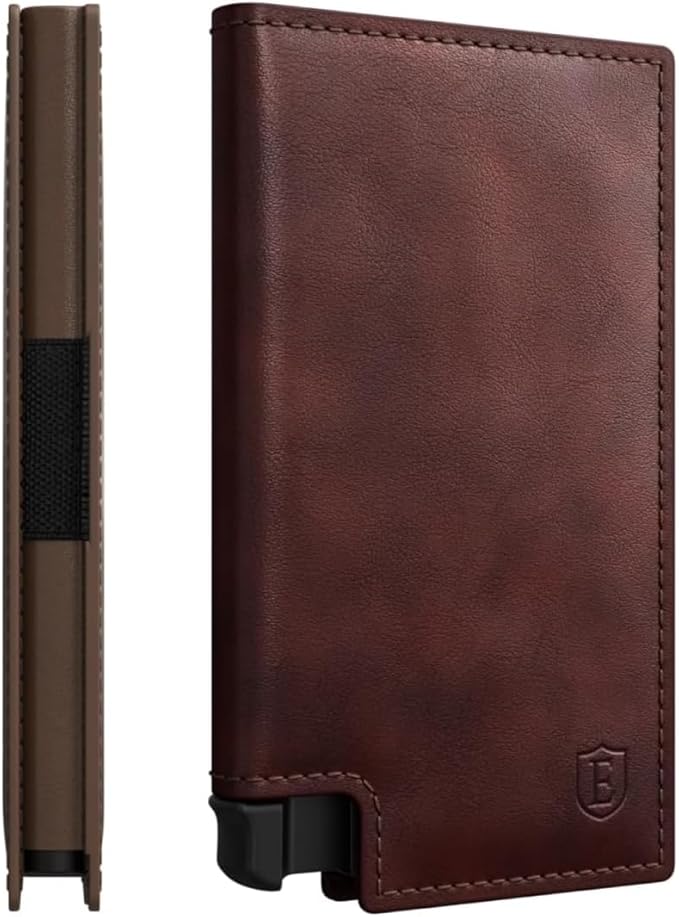
The Ekster Parliament adds two things that no other wallet on this list offers: a quick-eject card mechanism and built-in tracking capability. The card ejector is a pull-tab on the side of the wallet that pushes a fan of up to six cards out simultaneously for quick selection — a faster and more direct method of card access than either the traditional bifold dig or the Ridge’s fanning method. For someone who accesses cards frequently throughout the day, this is a genuinely useful mechanical advantage.
The tracking integration works via a solar-powered tracker card — a thin card the same size as a standard credit card that fits inside the wallet alongside your other cards and connects to a network of Bluetooth-enabled devices via the Ekster app. The solar panel on the tracker card charges itself from ambient light, which means the battery effectively never runs out under normal daily conditions. Location data updates through crowd-sourced network pings when out of Bluetooth range of your own phone — a meaningful capability that distinguishes this from a basic Bluetooth tracker.
The construction is full-grain leather with a rigid RFID-blocking shell around the card compartment. The wallet is slim despite the tracker card, and the quick-eject mechanism adds minimal thickness. The Parliament is available in several leather colors and holds up well aesthetically over time.
The premium price reflects the tracking technology and the quick-eject mechanism. For buyers who do not particularly need tracking, the Ekster is harder to justify against the Distil Union or Bellroy at lower prices. But for someone who regularly misplaces their wallet — or who travels frequently and wants a recoverable wallet — the tracking integration is a practical feature rather than a novelty.
Key Features
Pros
Cons
Best for: Men who access cards frequently throughout the day and want the fastest possible retrieval, or frequent travelers who want a trackable wallet. The combination of quick-eject and tracking makes this the most functionally advanced option on the list.
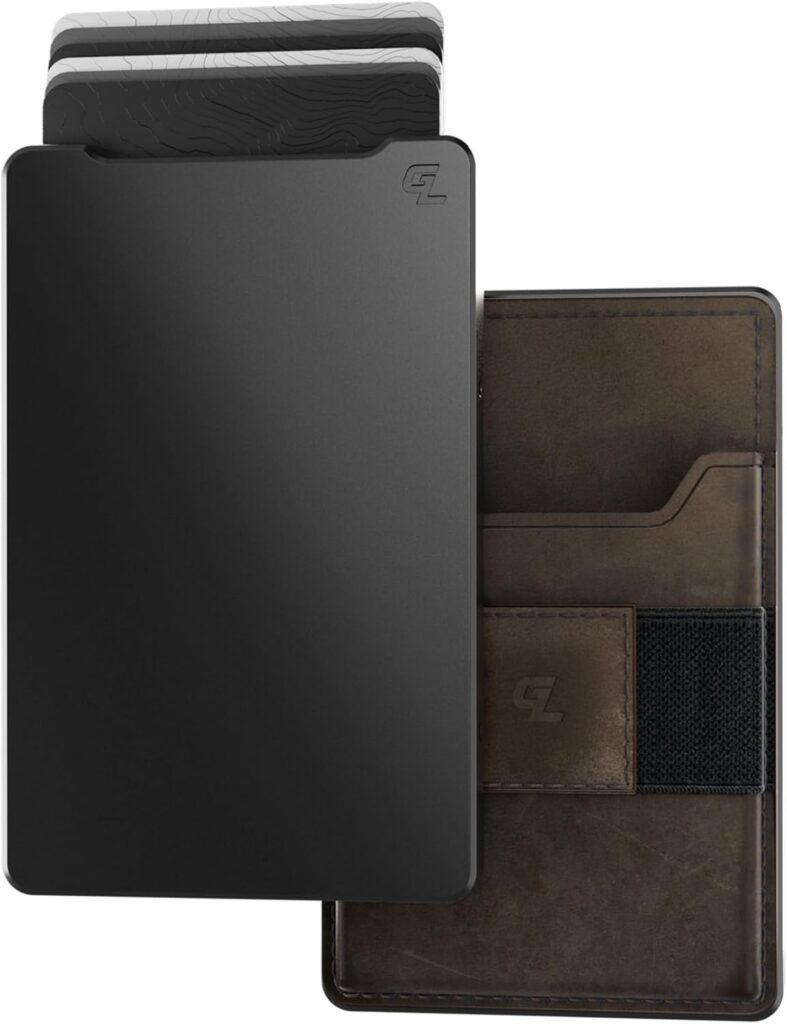
The Groove Wallet takes a structurally different approach from every other option on this list. Rather than leather pockets or a plate system, it uses a spring-loaded silicone band stretched around an aluminum frame. Cards are held by tension rather than friction or enclosure, and the spring mechanism fans the cards open when pressure is released — giving you a visual view of every card’s edge simultaneously, similar to flipping through a short card deck.
This design has specific practical advantages. You can see all your cards at once without removing any of them. Adding and removing cards is genuinely fast — slide a card under the band and it is secured immediately. The accordion-style fanning means there is no digging through overlapping cards in a shared pocket. For someone who carries a mix of cards they use daily and cards they access rarely, the Groove’s design makes the difference between the two immediately visible.
The aluminum frame provides structural rigidity and doubles as the RFID blocking layer — the same principle as the Ridge Wallet, where the metal construction itself prevents electronic skimming without requiring an additional lining. The silicone band is the component most likely to wear over time, but Groove sells replacement bands separately at a low cost, effectively making the wallet indefinitely serviceable.
Cash is handled by a separate outer clip or by folding bills under the band alongside the cards — neither solution is as clean as a dedicated cash pocket. For men who rarely carry cash, this is not a meaningful limitation. For those who regularly carry bills, the Groove is less convenient than a bifold design.
Key Features
Pros
Cons
Best for: Men who carry many cards and want the fastest possible visual identification and retrieval without fumbling through pockets. Particularly well suited to those who use cash rarely and prioritize card organization above all else.
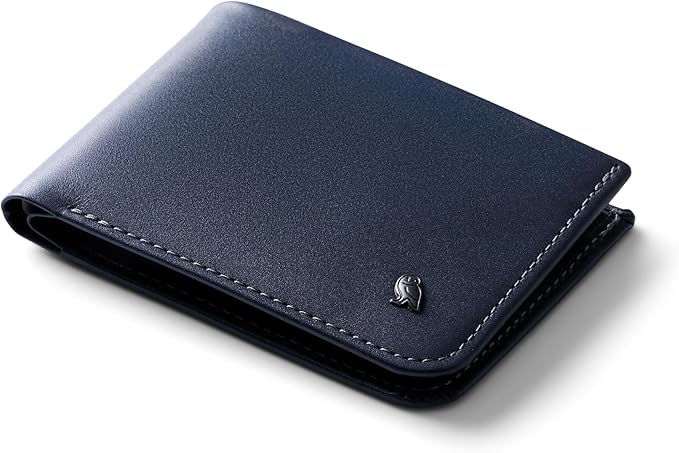
Bellroy is an Australian accessories brand that has built a strong reputation specifically around slim carry solutions, and the Hide and Seek is the wallet that best represents their design philosophy. The name refers to the wallet’s two-compartment structure: one accessible outer compartment for the cards you reach for constantly, and a hidden inner compartment — secured by a leather closure strap — for cards, folded cash, or anything you carry but access rarely.
The leather is environmentally certified through the Leather Working Group, which assesses tanneries on water usage, chemical management, and environmental impact. This is not a universal standard in the wallet industry, and for buyers who factor supply chain ethics into purchasing decisions, it is a meaningful differentiator. The leather quality is excellent — it develops a patina over time without cracking or peeling, and Bellroy’s fit and finish across stitching, edge treatment, and closures is consistently precise.
The slim profile is maintained by thoughtful internal geometry rather than by limiting capacity. A pull tab on the inner card stack makes retrieval fast without requiring the user to pinch individual cards. The outer quick-access slot holds one to two priority cards for immediate tap-to-pay use — a small design decision that reduces the number of times you need to open the wallet at all.
Bellroy offers a three-year warranty, which is shorter than Ridge’s lifetime guarantee but longer than most leather wallet brands. In practical terms, high-quality full-grain leather wallets used daily rarely fail structurally within three years regardless, so the warranty is mostly relevant for manufacturing defects.
Key Features
Pros
Cons
Best for: Men who want a premium leather wallet with a clean aesthetic, practical card organization, and ethical sourcing. The two-compartment design suits those who carry a mix of daily-use cards and occasional-use cards and want to keep them naturally separated.
The best wallet is the one that matches how you actually carry — not how you plan to carry. Here is a breakdown of the four main wallet types covered in this guide and who each one suits best.
Metal plate wallets like the Ridge prioritize durability and thinness above everything else. They are the right choice if you want a wallet that will not wear out, will not expand over time regardless of how many cards you load, and provides inherent RFID protection without an additional lining. The tradeoff is a different card access method — fanning rather than pulling from a slot — and the need to carry cash externally. For men who rarely carry cash and want the most durable possible carry, this category is hard to beat.
Accordion wallets like the Groove prioritize card visibility and access speed over everything else. If you carry many cards and frequently need to identify a specific one quickly, the fan-open design is meaningfully faster than any pocket-based wallet. The design is also inherently rigid and slim. The limitation is cash handling — this format is genuinely inconvenient for men who regularly carry bills. It is best suited to nearly cashless users who carry a high number of cards.
Smart wallets like the Ekster Parliament are for buyers who want their wallet to do more than hold cards. The quick-eject mechanism solves a genuine usability problem — card retrieval speed — in a way that no other format does. The tracking integration is a practical rather than gimmick feature for anyone who travels frequently, moves between multiple bags, or simply misplaces things regularly. The premium price is justified if you use both features; it is harder to justify if tracking is not a priority, since the quick-eject alone is available for less from other Ekster models.
Slim leather wallets like the Distil Union and Bellroy Hide and Seek are for buyers who want the familiar form factor and aesthetic of a traditional wallet without the bulk. Both use engineering solutions — elastic bands, internal geometry, pull tabs — to maintain a thin profile under real-world loading. Full-grain leather develops a patina and improves with age. This category is the most versatile for men who carry both cards and cash regularly and want a single wallet that handles both without compromise.
Most modern credit and debit cards use RFID chips for contactless payments. In theory, someone with an RFID reader could skim card data in a crowded area without physical contact. In practice, documented cases of RFID skimming in public are rare, and card networks have protections in place that limit the damage from a skimmed transaction. That said, RFID blocking is either built in at no cost — as it is with metal plate and aluminum frame wallets — or adds minimal cost to a leather wallet. It is a low-cost protection against a low-probability threat, and worth including if it is available without a significant price premium.
Most men carry between four and eight cards on a daily basis: one or two payment cards, a driver’s license, an insurance card, possibly a transit card or loyalty cards. A wallet rated for ten to twelve cards is appropriate for this load without being overstuffed. Consistently carrying more than ten cards in any slim wallet — leather or otherwise — will cause the wallet to bulge and will reduce the life of the materials. If you regularly carry twelve or more cards, an accordion-style wallet or a divided compartment design like the Bellroy Hide and Seek is a better structural fit than a single-compartment slim wallet.
Full-grain leather is the highest quality tier: the outermost layer of the hide, with natural grain intact, that is the most durable and develops a patina over time. Top-grain leather has had the outermost surface sanded or buffed to remove imperfections, resulting in a more uniform appearance but reduced durability and no patina development. Genuine leather is a catch-all term that applies to any product made from real animal hide — including the lowest-quality splits — and is not an indicator of quality despite the word “genuine.” For a wallet intended to last several years, full-grain leather is the only tier worth considering.
Yes, measurably. Research into back and hip alignment has shown that sitting on a thick wallet in a back pocket for extended periods can create minor but cumulative spinal misalignment. Slim wallets — those under 10mm thick when loaded — significantly reduce this effect, and front-pocket wallets eliminate it entirely since the wallet sits in a natural cavity rather than under the body’s weight. Any of the wallets on this list, carried in a front pocket, will be more comfortable during long periods of sitting than a traditional bifold in a back pocket.
The right wallet depends entirely on your carry habits and priorities. If maximum durability and thinness are the goal, the Ridge Wallet is the most defensible choice — nothing on this list outlasts it. If you want a premium leather wallet that handles both cards and cash while staying slim, the Bellroy Hide and Seek is the most refined option at its price. The Distil Union Wally Bifold offers similar quality with a slightly more accessible price and an American-made construction. For the fastest possible card access combined with the ability to locate a lost wallet, the Ekster Parliament is genuinely in a category of its own. And for men who carry many cards and want to see and reach all of them simultaneously, the Groove Wallet’s accordion design solves that problem better than any alternative format.
All five options represent a meaningful improvement over a traditional bulky billfold. The question is which specific combination of features — material, access method, tracking, and cash handling — fits the way you actually carry every day.